

• Research
  • Education
  • Publications and Data
  • People
  • News
  • Contact
  • Suomeksi

WDRGWDRGWDRGWDRG
Menu
  • Research
  • Education
  • Publications and Data
  • People
  • News
  • Contact
  • Suomeksi

Invisible soil water is critical for global food security

18.03.2021

Share this post

A newly published study highlights the impacts of green water variability on global crop yields

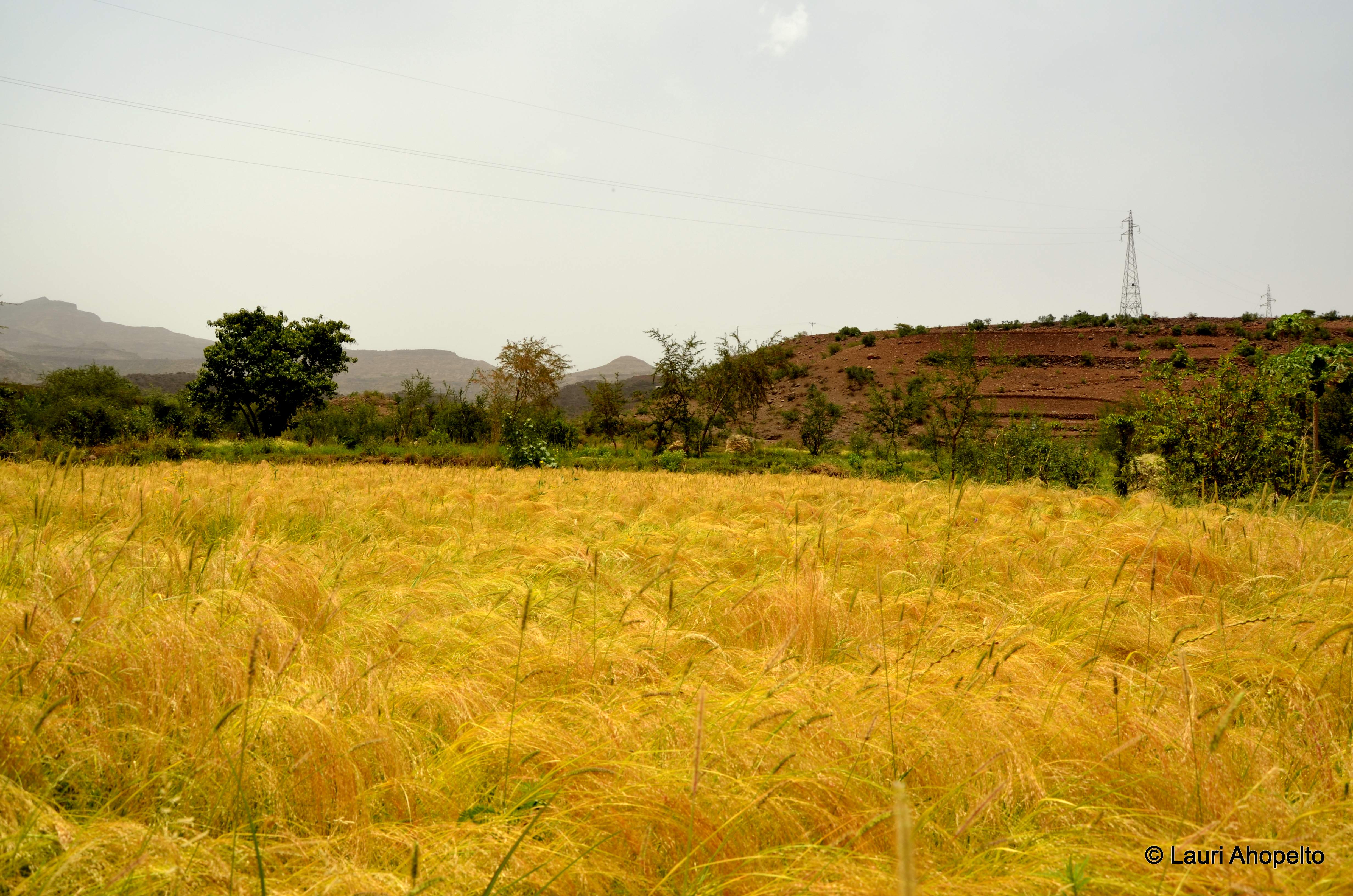
Water consumed by farming comes from either rainfall or irrigation. The water from rainfall is called green water, and it accounts for around 90% of global agricultural water use. In many regions, for example in Africa (see earlier WDRG blog post about rainfall changes in Sahel), rain stored in the soil is the only source of water for agriculture. In these areas, green water is vital for food production and people’s livelihoods.

In a recent paper,  lead by Edoardo Borgomeo, published in Environmental Research Letters, researchers from University of Oxford, Stanford University, Habib University, University of Massachusetts Amherst, Aalto University and the World Bank study how rainfed maize, wheat, soybean and rice yields are affected by green water variations globally.

The study shows that, globally drier conditions reduce yields, while wet conditions tend to lead in yield increases. Globally, the patterns are similar across all inspected crop types, however, the magnitude of the impacts varies between crops, maize and wheat showing the largest sensitivity. While the fact that dry conditions reduce yields seems like an obvious intuition, this study for the first time puts numbers and statistics behind it.

The sensitivity also varies with location, and the impacts green water anomalies are larger in arid and semi-arid regions. This means that in climatologically drier regions, green water variations have a stronger influence on crop yields.

Interestingly, the yield improvements observed for wet conditions, are reversed in humid regions. In humid regions, very wet conditions, i.e. in a water-logging situation, lower yields are observed for rice, soybean, and wheat.

The findings highlight that green water is imperative for global food production, and that improved green water management (e.g. use of cover crops, no-till systems, terraces) can contribute to making rainfed crop production more stable and hence enhance agricultural resilience to climate variations.


Matias Heino is a doctoral researcher in WDRG studying the susceptibility of global food production to climate shocks
 

Tweet

Related Post

DECEMBER 19, 2025

Off-topic or on point? Key...

Vilma Ristikangas  I am a doctoral researcher at...

10

SEPTEMBER 3, 2025

Fitting in or standing out?...

Jeroen Poelert & Anna Vilhunen Solving...

30

AUGUST 27, 2025

Six reasons why every...

Daniel Chrisendo  When I was a schoolkid, 10...

30
Here you can read blogs, research highlights, newsletters and other news from Water and Development Research Group.

Newsletters

 
  • WDRG Newsletter 1/2025
  • WDRG Newsletter 3/2024
  • WDRG Newsletter 2/2024
  • WDRG Newsletter 1/2024
Newsletter Archive →

News Archive

  • December 2025
  • September 2025
  • August 2025
  • April 2025
  • December 2024
  • November 2024
  • May 2024
  • November 2023
  • September 2023
  • April 2023
  • March 2023
  • November 2022
  • August 2022
  • June 2022
  • May 2022
  • April 2022
  • March 2022
  • December 2021
  • November 2021
  • October 2021
  • September 2021
  • August 2021
  • June 2021
  • April 2021
  • March 2021
  • February 2021
  • January 2021
  • December 2020
  • October 2020
  • September 2020
  • August 2020
  • June 2020
  • May 2020
  • April 2020
  • February 2020
  • January 2020
  • December 2019
  • November 2019
  • October 2019
  • September 2019
  • August 2019
  • March 2019
  • February 2019
  • January 2019
  • September 2018
  • July 2018
  • May 2018
  • April 2018
  • March 2018
  • February 2018
  • January 2018
  • December 2017
  • October 2017

Contact info

Aalto University

Water & Development Research Group
Aalto University
P.O.Box 15200
FIN-00076 Aalto
Finland

Aalto University is a multidisciplinary university, where science and art meet technology and business. We are committed to identifying and solving grand societal challenges and building an innovative future.

© Water and Development Research Group. Aalto University School of Engineering

Recent news

  • Off-topic or on point? Key takeaways from the Science Days for Public Administration and Municipal Research December 19, 2025
  • Fitting in or standing out? Finding academic belongingness in a specialized world September 3, 2025
  • Six reasons why every researcher should write blog posts August 27, 2025
  • Global Platform for Disaster Risk Reduction Reflections: Transformative Steps Toward Lasting Resilience August 15, 2025
  • Data-driven water and wastewater networks asset management; an achievable goal or mere fantasy? April 24, 2025

Twitter feed

Tweets by AaltoWAT

© 2020 WDRG, All Rights Reserved.